Quartz Crystals for Beginners: How to Choose Your First Specimen
The first quartz crystal you buy is rarely the one you keep forever, and that is fine. Quartz is one of the most abundant minerals on the Earth's surface, which means there is plenty of it about in every size, shape and level of clarity you could reasonably want. It is also forgiving: a decent quartz point costs far less than a decent specimen of almost anything else, so you can learn on it without much risk. The trick is knowing which handful of decisions actually matter when you are standing in front of a tray of specimens, or scrolling a seller's listings late at night.
Five things shape whether you will still like your first piece in five years: size, clarity, damage, where it came from, and where you plan to put it. Work through them in that order and the choice gets much simpler.
Decide What the Crystal Has to Do
Before you compare specimens, decide whether you want a display piece or a handling piece. They have almost nothing in common. A display piece can be large, architectural and delicately terminated; a pocket or desk piece should be smooth, robust and cheap enough that losing it is annoying rather than painful.
If you want to hold it, a tumbled stone or a polished point is the sensible choice — raw terminations are sharp and clusters have edges that chip. If you want it to sit on a shelf and catch the light, buy a cluster or a single terminated point and accept that it is furniture, not a talisman to carry about.
Size: Go Smaller Than Your Instincts Suggest
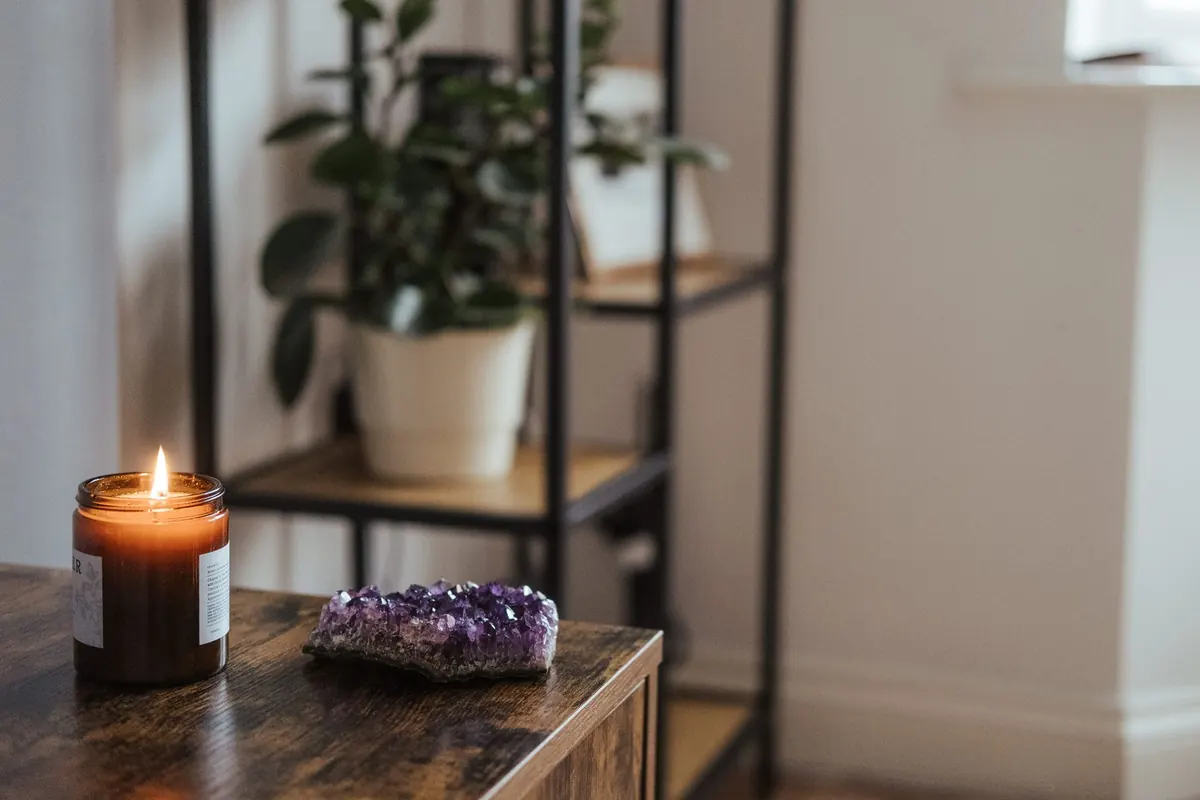
First-time buyers usually overbuy. A 20 cm cluster looks magnificent in a shop lit from below and rather like a lump of rock on a bedroom windowsill. For a first display piece, something in the 6–10 cm range sits comfortably on a bookshelf, feels substantial in the hand and is easy to move when you dust.
Weight matters more than you expect. Quartz is dense, and a fist-sized cluster can weigh a kilogram or more. Check the base as well: a specimen that wobbles will end up on the floor or wedged behind a book. A flat, cut or naturally level base is worth a lot of convenience.
Clarity and Character
Clear is not automatically better. Milky quartz, smoky quartz with a grey-brown haze, and amethyst whose colour pools at the tips are all good specimens. Judge a piece on how it looks in ordinary daylight rather than under a shop lamp. Look for even colour without dead grey patches, an absence of dull cloudy zones that swallow the light, and internal features you find interesting — rutile needles, ghostly phantoms, bubbles of trapped water.
Much of what is sold as citrine, smoky quartz or bright amethyst has been heat-treated or irradiated. That is normal in the trade and not dishonest, provided the seller says so. Natural citrine, in particular, is far less common than the heated amethyst sold under that name. If the colour is uniform, intensely saturated and the price seems low for the size, it is reasonable to ask.
Damage: Where Beginners Lose Money
Quartz is hard but brittle, and damage is not always obvious. Turn the piece in your hand and look at it from several angles.
- The termination. Chips and bruises on the point are the most common fault. A small nick is tolerable; a flattened or crushed tip usually is not.
- Internal cracks. Bright white lines that catch the light are often natural and harmless, but a crack that runs across the body can spread with handling or temperature change.
- Repairs. Loose points are frequently glued back onto their matrix. Hold the specimen up to a lamp and look along the join for a faint glue line or a colour mismatch.
- Polished or etched bases. These can hide a crystal that snapped off and was tidied up. Not a problem if you know, but not what you should pay a premium for.
Decide in advance how much damage you can live with. A single chip on an otherwise lovely specimen is fine if the price reflects it.
Sourcing: Questions Worth Asking
Quartz is found in Brazil, Madagascar, the United States, the Alps, Namibia, Cornwall and countless other places. Ethical sourcing in the mineral trade comes down largely to traceability and honesty.
Ask where the specimen was found. Good sellers will tell you the country, often the region or the mine, and will be upfront about treatments, repairs and restoration — many fine specimens in museums have been repaired. Be cautious with vague listings that say only "Africa", with stock photographs that clearly are not the piece you will receive, and with anything said to come from a protected site or a place where collecting is restricted. No crystal is worth breaking the rules for.
If you are buying because you find crystals calming, that is a perfectly good reason. Just treat it as a decorative and personal choice rather than a treatment, and speak to a qualified healthcare professional about any actual health concern.
Display and Storage
Keep amethyst and other coloured quartz out of strong, direct sunlight, which can dull the colour over months and years. Dust with a soft brush rather than a cloth, which can drag grit across the surface and scratch it. Avoid household cleaners, particularly acidic ones, and never pour hot water over a cold specimen — sudden temperature change is a reliable way to crack something with internal fractures.
Put heavier pieces on lower shelves, away from the edge and away from anywhere they might be knocked. A little museum putty under a wobbly base works wonders. If you have children or cats, assume anything within reach will be investigated.
A Short Checklist Before You Buy
- Pick it up. If you cannot feel the weight, the base and the termination, you are buying a photograph.
- Look at it in daylight. Fluorescent shop lighting flatters almost everything.
- Check the tip for chips and the base for glue.
- Ask where it came from and whether it has been treated or repaired.
- Measure the space you plan to put it in before you fall in love with the size.
Buy the piece you would still choose if nobody else ever saw it. That is usually the one that stays on the shelf long after the trend, the impulse and the shop receipt have gone.
Photo: E Pro / Pexels